
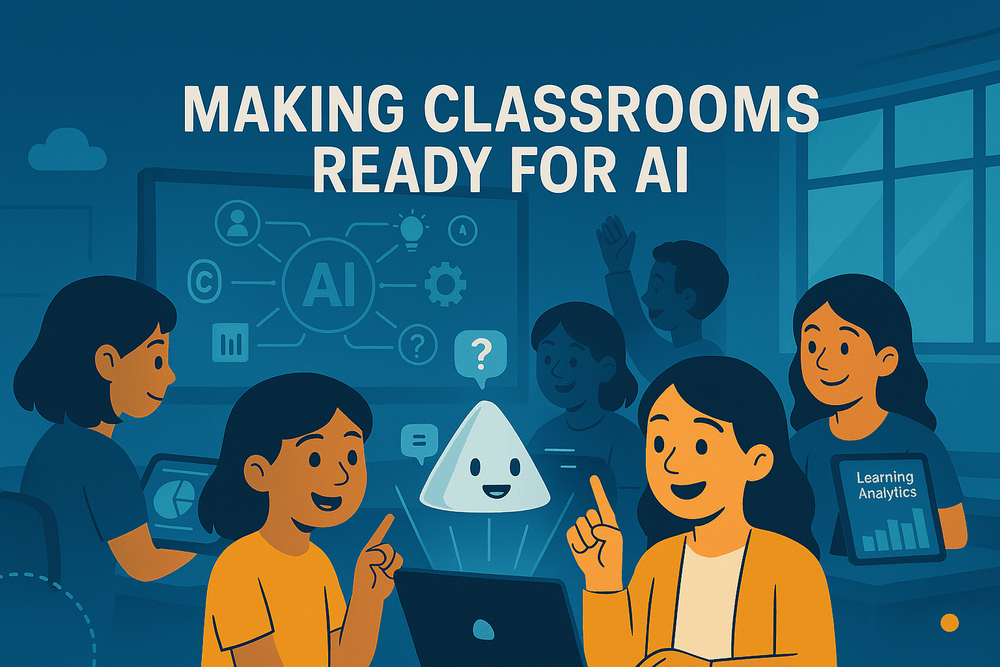
📘 Building AI-Ready Classrooms: A Guide for School Leaders
Integrating AI into schools isn’t as simple as flipping a switch. It takes thoughtful planning, teacher support, and a clear vision. Here’s how school leaders can build AI-ready classrooms where tools like TUTI thrive.
1️⃣ Secure the Necessary Infrastructure
Before anything else, the tech must work. Ensure:
- Every student has access to a device (laptops or tablets)
- Stable, high-speed internet throughout the school
- Security and privacy compliance for AI platforms
💡 Tip: Pilot in one subject or grade first to reduce upfront cost. Seek EdTech grants or partnerships for funding.
2️⃣ Start with Pilot Programs
Test AI tools on a small scale before full adoption:
- Select tech-forward teachers as early adopters
- Define clear success metrics (e.g. improved grades, reduced grading time)
- Run pilots (e.g. TUTI in 6th-grade math)
🧪 Use the pilot to identify training gaps and build momentum.
Santa Fe Public Schools phased their rollout over 2 years – year one focused on training and pilots, year two on expansion.
3️⃣ Invest in Professional Development
Teachers are the heart of AI integration:
- Provide hands-on training sessions and ongoing support
- Cover both usage (UI, dashboards) and pedagogy (when and how to use AI)
- Address concerns openly ("AI won’t replace you")
👩🏫 Consider appointing an AI Coach or creating a peer-sharing platform.
4️⃣ Create Clear Usage & Ethics Policies
Prevent misuse and confusion with solid policies:
- What’s allowed on take-home exams?
- How should AI-generated work be used?
- What student data is collected and how is it protected?
📜 Involve IT, teachers, students, and parents in policy creation. Promote integrity and equity.
NYC went from banning AI to encouraging responsible use – a great model for balancing innovation with caution.
5️⃣ Engage Parents & Community
Bring parents into the conversation:
- Host demos and Q&A nights
- Share a simple FAQ (e.g. screen time, data safety)
- Highlight real-world student gains
🤝 Community trust fuels adoption. Keep district leaders updated with reports and outcomes.
6️⃣ Monitor, Evaluate, and Iterate
Once AI is in place:
- Track usage metrics and student progress
- Collect teacher feedback regularly
- Adjust based on results and challenges
🔁 Create an AI Task Force to oversee improvements. Watch for both benefits and dependency risks.
7️⃣ Cultivate an AI-Positive Culture
Create a culture where AI isn’t a gimmick – it’s a growth tool:
- Share wins in newsletters and staff meetings
- Have students share how AI helped them
- Encourage peer observations of AI-enhanced lessons
🌱 Foster innovation by celebrating experimentation and continuous learning.
🎯 Final Thoughts
With the right foundation, AI tools like TUTI can transform teaching and learning.
Just as Santa Fe Schools embraced change with planning and patience, your district can lead with intention – preparing your classrooms, training your teachers, and welcoming your community into the future of education.
✅ Being AI-ready is more than having tech – it’s about mindset, support, and purpose.
📚 References
- Education Week. (n.d.). How districts are rethinking their approach to AI. Retrieved from edweek.org
- Santa Fe Public Schools AI Integration Plan. Mentioned in context as an example of phased implementation strategy.
- New York City Department of Education. (2023). Guidelines for Responsible AI Use in Schools.